
Storytelling In Kindergarten
Books of course play an important role in the Steiner Waldorf kindergarten, but oral storytelling is one of its distinctive signature practices. Stories are often told with simple props or puppets, sometimes through a more elaborate puppet show, and, once children’s imaginative capacities have developed sufficiently, simply as an oral tale. Stories are repeated daily for at least a week, allowing children to enter deeply into the language, imagery, and narrative structure. As familiarity grows, children may begin to participate by moving puppets, retelling parts of the story, or - particularly amongst the older children - performing the puppet show themselves.
A wide range of stories may be used. Some stories are simple, rhythmic, and repetitive, making them easily accessible for younger children, whilst older children learn them well enough to retell or perform them independently. Fairy tales and folk tales offer experiences of wonder, transformation, and moral imagination, while traditional tales from around the world introduce children to a diversity of cultures and perspectives. Teachers may also tell pedagogical or social stories that gently explore aspects of social relationships or expectations, alongside stories connected to festivals, different religions, and the changing seasons and outdoor environment.
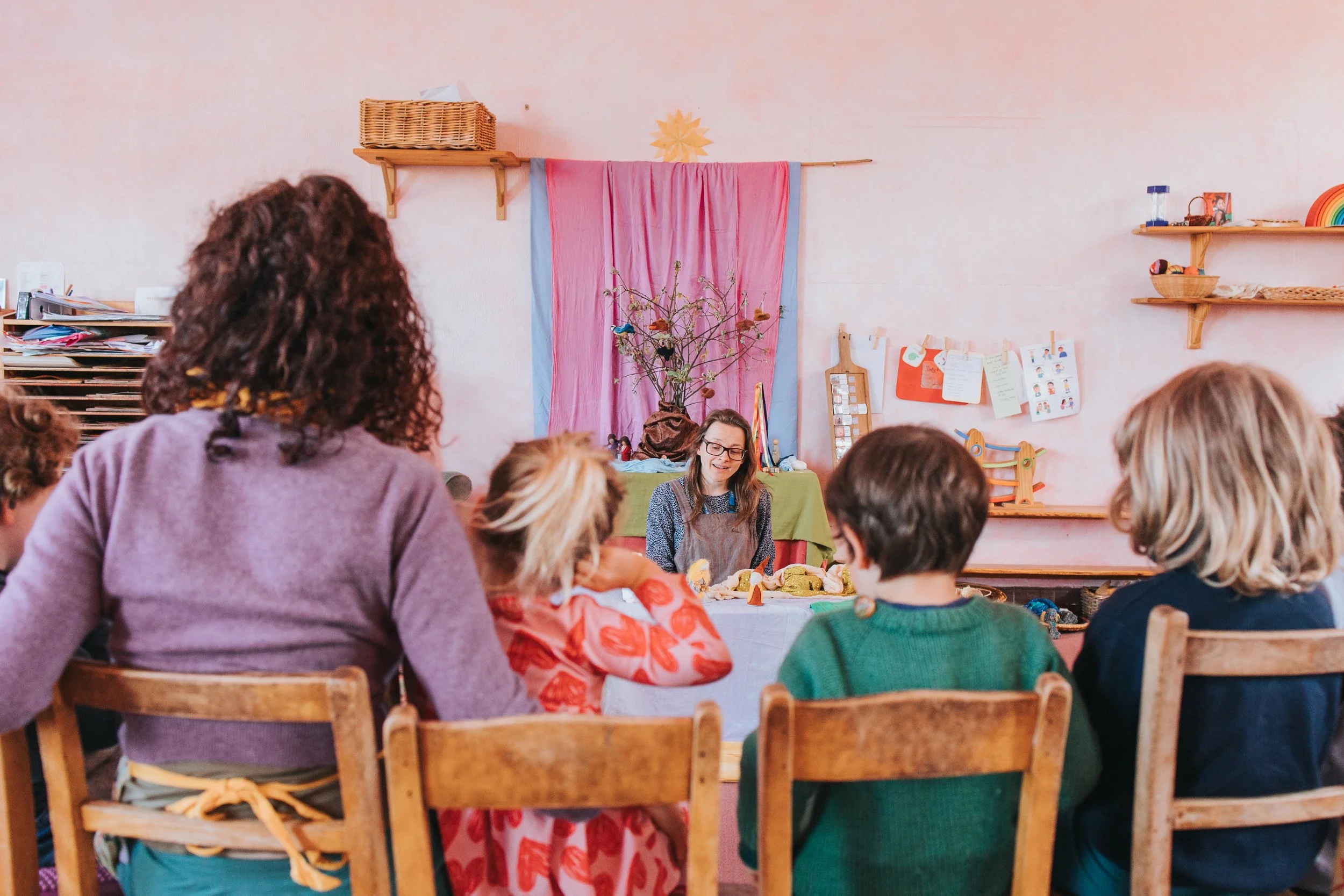
The Benefits of Storytelling
Steiner Waldorf kindergartens value the role of books, book sharing, and book reading in early childhood education, and all of the proven benefits that this brings to children’s educational outcomes. However, storytelling brings a wide range of additional and complementary advantages.
Oral storytelling provides children with rich, meaningful, and emotionally engaging experiences of language, supporting vocabulary development in ways that are social, contextual, and memorable.
Oral storytelling plays an important role in this process by ensuring that young children experience language and narrative as meaningful, engaging, and socially rewarding
Oral storytelling is a key method of developing comprehension skills. Developing the ability to create mental pictures plays an important role in supporting memory, inferencing, narrative understanding, and meaning-making, with children’s capacity to visualise stories strongly associated with comprehension development. Oral storytelling, scaffolded by simple and unformed props or puppets, is particularly powerful in supporting this process because children must actively generate imagery internally, imagining characters, actions, settings, and emotional experiences through language itself.
