
Rudolf Steiner indicated that classroom colours should match the developmental stages of the children. Walls transition from warm, soft reds and pinks in early childhood to active yellows in the middle years, balanced greens, and finally introspective blues and lavenders for older students.
Colors shift as children grow, mirroring their changing inner life and emotional maturity from year to year.
Kindergartens and early classes use soft pinks and peaches to provide a cozy, protective, and gently active space that matches a young child's energetic physical state.
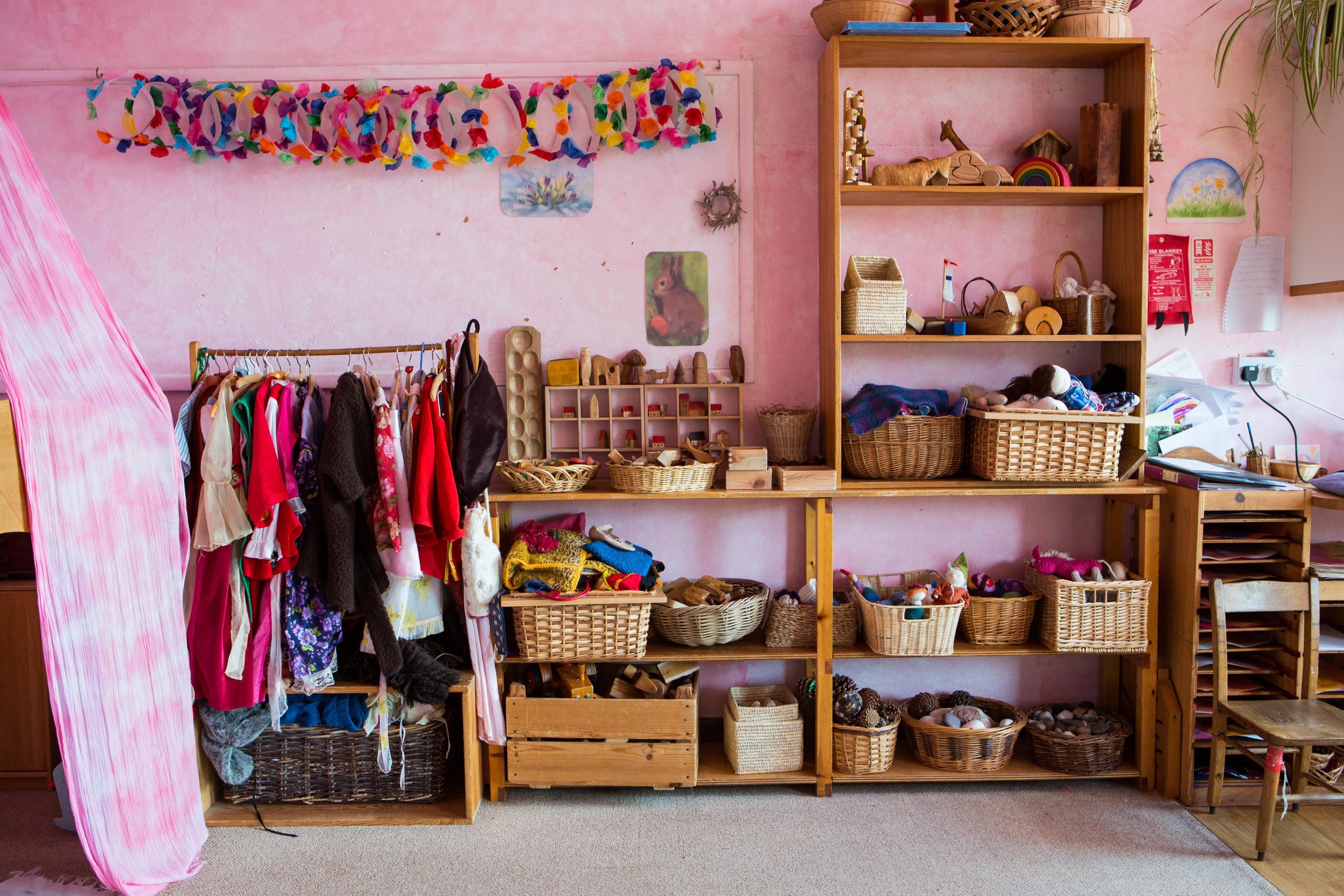
Around class three and four (the ninth year rubicon), colours move toward energetic yellows and balanced greens as children begin developing a stronger sense of individuality and emotional equilibrium.
In Classes six to ten school we use cooler shades like blue, lilac, and lavender to support deeper thinking, focus, and inward reflection.
Walls are typically painted using lazure—a translucent, layered watercolor technique applied over a white base—which gives the walls a soft, breathing, three-dimensional quality rather than a flat, solid look and feel.
Solid, flat walls can feel restrictive to a child. Lazure creates an optical depth that makes the physical boundaries of the classroom seem to recede.
Steiner noted that the human eye naturally generates a "complementary after-image" in the mind. For example, looking at a soft pink wall causes the child's inner organism to produce a calming, balancing green internally.
